The general meeting will be held on Saturday, March 28, at 10:00 a.m. in the Hafnia Hall, in the large meeting room on the first floor.
The agenda will be as follows:
1. Welcome by a board member
2. Election of a chairperson
3. Selection of a secretary
4. The Chair’s Report
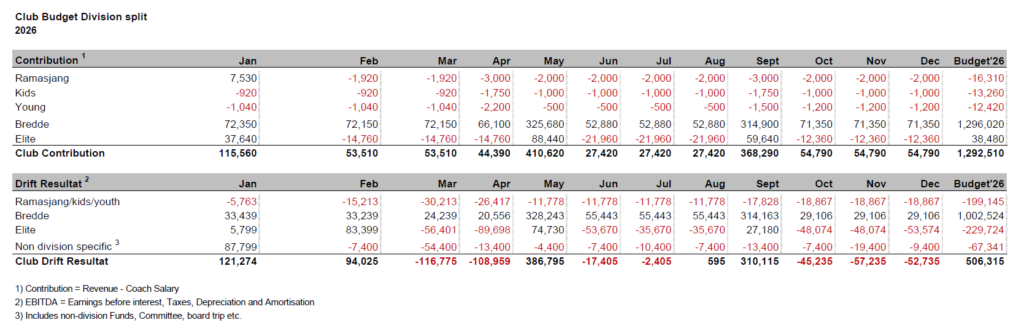
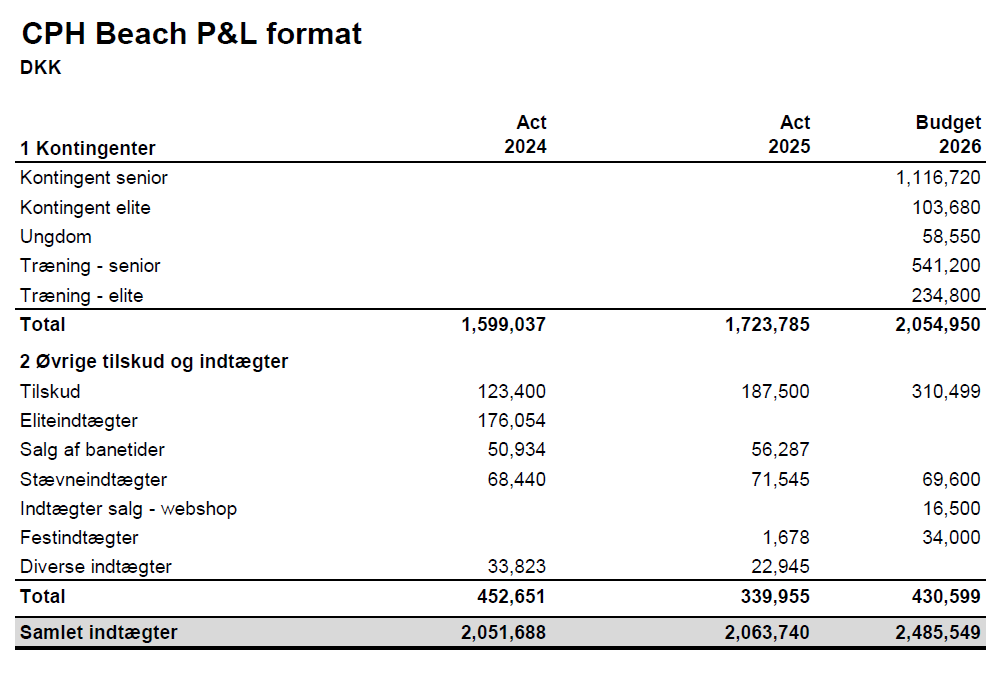
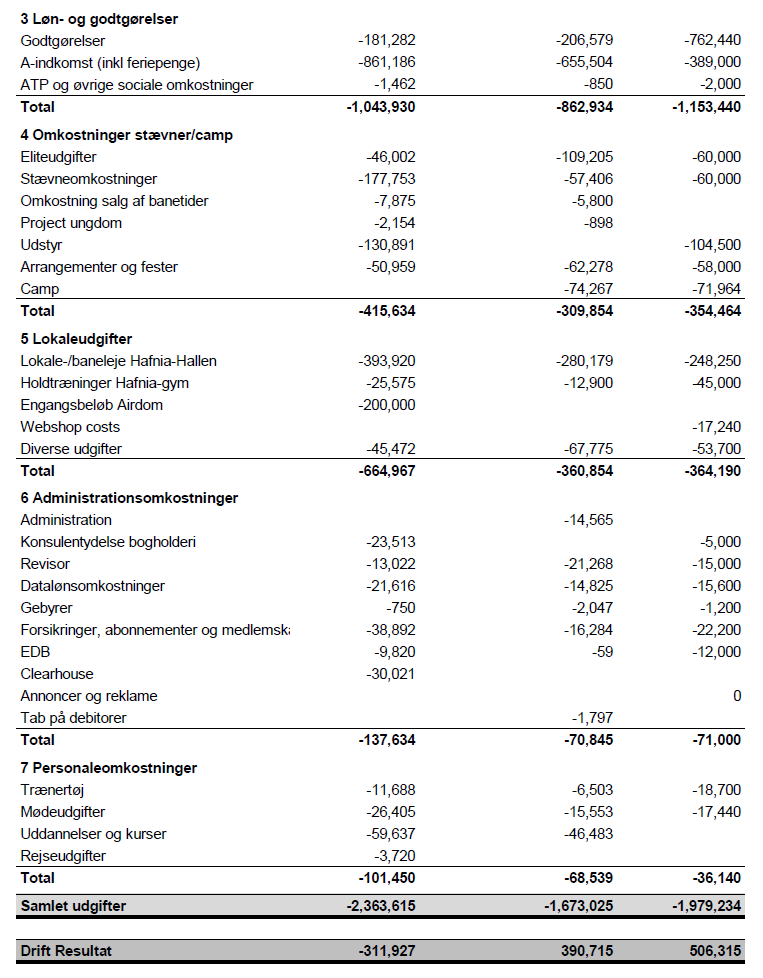
5. The treasurer presents the audited financial statements for approval
6. The treasurer presents the board’s budget for discussion
7. Proposals Received
8. Setting of dues
9. Selection of
a. Board of Directors
b. one auditor + one alternate
c. establishment of committees
10. If applicable
The submitted proposals, financial statements, and budget are attached so that members have the opportunity to review them before the general meeting.
For the upcoming general meeting, one board member and two alternates who are up for election will be standing for re-election. In addition, there is an opening for a new treasurer and possibly one or two board members.
Proposals received
Proposal 1:
The club should stop using social media (Facebook) as the primary communication platform between the board, coaches, and members.
Context:
A public or semi-public presence on social media should not be a prerequisite for club membership. Facebook groups are semi-public environments (unverified, unencrypted, subject to AI training). Currently, most communication from the board (except for major updates, which are also published on the website) takes place in Facebook groups. All communication between coaches and players currently takes place via Facebook groups. This raises concerns about privacy and security (unencrypted, unprotected, US-dependent, AI training open). This
also affects members who choose to limit their presence on social media. Several alternatives can be considered: – increased email communication – use of encrypted communication platforms (WhatsApp groups, Messenger, etc.) – configuring Sportyfriends (Danish, limited access) to be used as a communication platform (e.g., within teams) – engaging with another sports management platform, e.g., Holdsport (Danish, limited access) There are several club members working in the IT field who can support the initiative with insights and/or practical setup.
This is NOT about removing the club’s presence from social media. However, members’ use of social media should be entirely voluntary and must not affect their experience.
Proposal 2:
Remove both new and old public spreadsheets containing training times and member names.
Context:
Both the old and new spreadsheets containing Bredde member names should have restricted access or, preferably, not be used at all. Members of the training groups can be visible on another platform (Sportyfriends, email, etc.). The reason for this is privacy concerns—currently, it is possible to identify when and where club members are located based on data published by the club.
Proposal 3:
- Making the SU criteria public—just as was done with the registration criteria—and allowing players to request their own evaluation.
Context:
First, the publication of the priority list upon registration is a good example of transparency, which can also be achieved in other areas. And it doesn’t matter whether members agree with the criteria or not.
Regarding player evaluations and the process surrounding them—there are several best practices that the SU is currently implementing, but the lack of transparency toward the players increases the level of dissatisfaction, uncertainty, questions, and blame directed at coaches or the SU, etc.
Making individual evaluations available is the members’ right under data protection regulations.
Proposal 4:
The General Assembly resolves that, going forward, members shall have full access to the rules, guidelines, and municipal allocations that form the basis for the club’s seasonal planning. This means that relevant documents (e.g., municipal guidelines, allocated court times, and the club’s allocation principles) will be made available to members so that they can see the basis for the decisions the board uses when preparing season plans.
Brief justification:
The purpose is to ensure transparency regarding season planning so that members can understand the priorities that are set and so that dialogue about the club’s planning can take place on a shared and informed basis.
Proposal 5: Amendment to the bylaws regarding the following sections
§ 4 Admission of Members.
Anyone with an interest in beach volleyball may be admitted as an active or passive member.
Registration is done via the website.
Passive members do not have access to the sport itself, but are eligible for election to the board.
Members are obligated to comply with the club’s bylaws and uphold the club’s objectives.
§ 5 Resignation – Suspension – Expulsion
Resignation
A member is automatically considered to have resigned if the membership fee is not paid on time.
Suspension
The Board may impose a suspension on a member for a period of between a minimum of 1 and a maximum of 3 months.
A suspension is imposed when it is determined that a member has behaved inappropriately toward other members, employees, or partners, or is deemed to be acting against the association’s interests.
Suspension may be made conditional, such that it only takes effect if the member fails to comply with the requirements set forth.
Suspension requires a two-thirds majority at a board meeting.
During the suspension period, the member loses their right to participate in all club activities.
When a decision on suspension is made, the member has the right to be heard beforehand at a board meeting. The decision may be reviewed at the next general meeting in the same manner as in the case of expulsion.
Upon completion of the suspension, membership and accrued seniority shall continue.
Expulsion
The board may expel a member.
Expulsion is imposed when the board determines that suspension is insufficient or that particularly serious circumstances, beyond those required for suspension, apply.
Before the Board makes its decision, the member must be summoned and have had the opportunity to be heard at a Board meeting. The member may request an advocate in the form of another member who has had at least 12 weeks of continuous membership up to the meeting.
A decision to expel a member requires a two-thirds majority at a board meeting.
A member who has been expelled by the board may request that the matter be placed on the agenda for the next general meeting. The expelled member is entitled solely to participate in the vote to confirm the expulsion at the general meeting.
Furthermore, the expelled member may, with documented support from at least one-third of the members, demand the convening of an extraordinary general meeting where the item regarding expulsion is the sole item on the agenda.
Upon expulsion, and pending any vote on confirmation at a general meeting, the member loses all rights to participate in the club’s activities.
In the event of expulsion, the member’s proportional expenses for membership and purchased activities will be refunded if a general meeting fails to confirm the board’s decision to expel the member.
Confirmation of expulsion by a general meeting requires a two-thirds majority.
An expelled member may be readmitted at a subsequent general meeting by a simple majority if the matter is raised in a timely manner by the board or by members.
§ 10 The Board of Directors.
The Board of Directors consists of 5–6 members—a chairperson, vice chairperson, treasurer, and 2–3 other board members. In addition, there are 1–2 alternates.
Elections for the Board of Directors are held every year.
Board members are elected for a two-year term, and alternates for a one-year term.
Two, or possibly three, board members are elected in odd-numbered years.
One, or possibly two, board members, as well as a treasurer, are elected in even-numbered years.
If the number of candidates nominated for the board corresponds to the number of available seats, the general meeting may choose to approve the candidates collectively by a show of hands. A simple majority is sufficient for election.
The chairperson is elected at the general meeting from among the members of the board. Both positions are elected for one year at a time. The vice-chairperson is appointed by the board itself.
In the event of a tie vote on the board, the chairperson’s vote counts as two. If the Chair is absent from a Board meeting, the right to a double vote in the event of a tie passes to the Vice Chair.
The Chair and the Treasurer must be of legal age.
The Board has a quorum when at least half of its members, including the Chair or the Vice Chair, are present.
If one or more board members resign during the term of office, alternates shall join the board to maintain a minimum of five board members. Alternates shall join in the order in which they were elected at the general meeting.
The Board may establish any committees and working groups it deems necessary.
Relevant information from the club’s Board can be found on the club’s website or Facebook page.
The General Meeting may at any time pass a vote of no confidence in one or more members of the Board, including the Chairperson. Upon the passage of a vote of no confidence, the member in question is deemed removed from office.
A vote of no confidence is passed by a two-thirds majority of the voting members present.
If a board member is removed by a vote of no confidence, a new election for the position is held at the same general meeting for the remainder of the term.
Budget and Financial Statements